Tuesday, February 21, 2017

Tree Planter Training, Learning How To Plant

This post is a follow-up to my pre-season overview post, which talked about the first half of my online tree planter training program.

In 2005, I put an initial series of tree planter training videos online.  Those video were getting thousands of views every year, but they were very low quality.  YouTube was still in its infancy, and digital video resolutions & frame-rates were very limited.  In 2012, I started the project over again from scratch, and by 2017 I was happy with the quality of the content.  From 2019 onward, I'll be updating those videos every year at a quality level that is suitable for sharing with our entire industry.

My training series consists of a total of twenty modules.  The first six videos are meant to be watched a couple months before the season starts, by people who are potentially interested in applying for a job as a planter.  Those videos are designed to let you know what you're getting yourself into if you decide to spend a summer in the bush.  You can find them in the link at the top of this post.

The focus of the last fourteen videos (the ones covered in this post) is more specifically related to the process of understanding the characteristics of trees, learning how to actually plant them, meeting quality & density expectations, what to expect from the natural environment, and all the other "hands-on" stuff that you'll be expected to know as soon as you strap your bags on.  Although this series was produced in British Columbia & Alberta, most of the information is also highly relevant to planting in other Canadian provinces (except maybe for the procedures for assessing quality & density).


The content in these videos is not targeted solely at inexperienced job applicants.  I'm 100% confident that all current experienced planters will find things in these videos that they didn't know.  You may wonder why I feel bold enough to make this claim?  Simple: because I learned hundreds of new things myself while putting all of this training material together.

These fourteen videos are about five hours in total length, so you'll need to set aside an entire afternoon or evening to watch them.  I'd suggest that you watch them with a pen and paper, so you can make notes about questions that you can ask recruiters or crew bosses at the companies that you apply to.  You should also bookmark this post, because you may want to come back and watch some of these videos more than once.  If you watch them well in advance of the season and this is your first year, you'll probably want to watch them as a refresher just a day or two before you hit the field.  Several companies are screening these as start-up training material when you first arrive to your new job.

There is a print version of this information, available on Amazon.  The book is called Step By Step, A Tree Planter's Handbook.  The book actually contains FAR more information than these videos do.  Ultimately, if you get a job as a tree planter, I'd highly recommend that you buy a copy of Step By Step.  More than a dozen major tree planting companies are using it as the basis for their training framework, and they'll probably tell you that you have to buy a copy anyway.  Get ahead of the curve, because there is an incredible amount of information in the book.  Here's more information:


Without further ado, here are the last fourteen videos in the training series.  I hope you find them to be useful.


Map Reading and GPS Systems
Contents:  GPS systems, other map features, understanding scales, geo-referenced digital maps, always know where you are.


Nature & the Environment
Contents:  Weather, determining direction from the sun, plants, animals, birds.


Basic Silviculture Knowledge
Contents:  Stocking standards, basic seedling physiology, tree structure, shade tolerance, environmental factors affecting growth, basic soils & planting media, seasons.


Stock Handling
Contents:  On-site seedling storage, handling seedling boxes, correct handling of seedlings and bundles.


Common BC Conifers
Contents:  Pine, spruce, fir, and other important species.


Planning Reforestation Activities
Contents:  The Pre-Work conference, the planting prescription, potential non-planting components, block boundaries, mixing species.


Planting Equipment
Contents:  Planting bags, your shovel, miscellaneous planting equipment, demonstration, non-planting gear.


Planting A Seedling
Contents:  Selecting the best microsite, microsite preparation, opening the hole & grabbing the seedling, planting the tree & closing the hole, planting demonstration.


Meeting Quality Requirements
Contents:  FS 704 system overview, throwing plots, specific faults, damage to seedlings, microsite selection, planting quality.


Spacing, Density, & Excess
Contents:  What's in a plot, plotted versus planted density, target spacing and minimum spacing, excess, missed spots (a quality fault), penalties.


Site Preparation
Contents:  Untreated (raw) ground, trenching, mounding, scrapes, windrows, drag scarification, chemical scarification, prescribed burning, selective harvesting, assessing a block.


Maximizing Productivity
Contents:  Staying organized, efficient planting techniques, efficient work strategies, staying focused.


Behaviours & Attitudes
Contents:  Maintaining the health of the ecosystem, responsible behaviour, safe behaviour, respectful behaviour, treatment of co-workers, stashing.


Wrap-Up
Contents:  Field practice, career options, final advice.


Here are some additional links and resources that might be of interest to potential planters:

Tendonitis Resources from Total Physio:  replant.ca/tendonitis
"Fit To Plant" from Selkirk College:  replant.ca/fittoplant

Getting a Job:  replant.ca/jobs
Photo Galleries:  replant.ca/photos
Planting Books:  replant.ca/books
Message Board:  replant.ca/phpBB3
Instagram:  instagram.com/replant.ca


Regardless of whether you're a first-time or experienced planter, if you're applying for work at a new company, use the following list of questions to help determine if that employer would be a good fit:
 www.replant.ca/docs/Questions_To_Ask_A_Potential_Employer.pdf

You may wonder why I'm offering all of these videos for free?  You may think, "what does he want in return?"  Well, that's a good question, because I actually DO want something in return:  I want you all to share this with as many other potential planters as you can.  Make sure they have the opportunity to get a full understanding of what they're getting themselves into, BEFORE they put their first tree in the ground.  If someone isn't suited for tree planting, it's much better that they "quit" before they start, instead of three or four days into the season.

Please share!

- Jonathan "Scooter" Clark 
www.Replant.ca
www.jonathanclark.ca
www.replant-environmental.ca
 

Saturday, February 11, 2017

Tree Planter Training, Pre-Season Overview

In 2005, I put an initial series of tree planter training videos online.  Those video were getting thousands of views every year, but they were very low quality.  YouTube was still in its infancy, and digital video resolutions & frame-rates were very limited.  In 2012, I started the project over again from scratch, and by 2017, I was fairly happy with what I had produced.  From 2019 onward, I'll be updating the videos every year to maximize the quality of the content.

The training consists of twenty modules altogether.  The first six (which are the focus of this post) are meant to be watched a couple months before the season starts, by people who are potentially interested in applying for a job as a planter.  If you're looking for the other fourteen videos, which focus more on the hands-on aspects of the job, go to this link.
 
These videos will help you understand what you're getting yourself into!  This is NOT an easy job.  The number of first-year planters who try the job for a few days or weeks and then quit is pretty high.  If you're not going to enjoy the work, it's better that you make that decision before you start planting, rather than after you've spent a few thousand dollars on buying equipment and travelling to your first work site.


I highly recommend that if you're thinking about planting, you watch these videos very carefully before you commit to accepting a position at a planting company.  These six videos are just slightly over three hours in total length, so you'll need to set aside an afternoon or evening to watch them.  I'd suggest that you watch them with a pen and paper, so you can make a list of questions to ask recruiters or crew bosses at the companies that you apply to.  You should also bookmark this post, because you may want to come back and watch some of these videos more than once.

There is a print version of this information, available on Amazon.  The book is called Step By Step, A Tree Planter's Handbook.  The book actually contains FAR more information than these videos do.  Ultimately, if you get a job as a tree planter, I'd highly recommend that you buy a copy of Step By Step.  More than a dozen major tree planting companies are using it as the basis for their training framework, and they'll probably tell you that you have to buy a copy anyway.  Get ahead of the curve, because there is an incredible amount of information in the book.  In addition, it's full of reference information that will be useful to experienced planters (such as a chapter about coastal planting, with a list of contacts for coastal companies, and chapters about logging, helicopters, other silviculture work, and a lot of things that the YouTube videos don't address).  Here's more information:


But for now, here are the first six videos in the training series.  I hope you find them to be useful.  I think I would have made about five thousand dollars more in my first season if I had known all of this information before I started planting.  Crew bosses take note ... you should share this information with everyone on your crews.


Introduction, History of Tree Planting
Contents:  A history of BC's Tree Planting Industry, the modern BC Tree Planting industry.


Why Do We Plant Trees?  What Makes A Good/Bad Planter?
Contents:  Overview of forest management in BC, administration of logging & reforestation, people who should go planting, people who should not go planting, some common myths about planters.


Long-Term Worker Health, & Nutrition
Contents:  Water/hydration, alcohol/drugs/tobacco, fitness & avoiding injuries, personal protective equipment, minimizing the risk of illness, mental health.


Working Safely from Day to Day, Understanding Hazards
Contents:  Assessing risk, personal protective equipment, vehicles, natural worksite hazards, weather, chemicals in the workplace, wildfires, bears, other large animals, insects, miscellaneous, industry-certified training courses.


Rules & Regulations that Protect the Worker
Contents:  Employment Standards Act, Workers' Compensation Act, Canada Human Rights Act, minimum camp standards, complying with client/licensee policies, employer policies, camp-specific or crew-specific policies, corporate organization.


What It's Like to Live in a Tree Planting Bush Camp
Contents:  Overview of basic structure, the daily routine, your cooks & meals, other equipment, when you're not in a tent camp.


Here are some additional links and resources that might be of interest to potential planters:

Tendonitis Resources from Total Physio:  replant.ca/tendonitis
"Fit To Plant" from Selkirk College:  replant.ca/fittoplant

Photo Galleries:  replant.ca/photos 
Planting Books:  replant.ca/books
Message Board:  replant.ca/phpBB3
Instagram:  instagram.com/replant.ca


Regardless of whether you're a first-time or experienced planter, if you're applying for work at a new company, use the following list of questions to help determine if that employer would be a good fit:
 www.replant.ca/docs/Questions_To_Ask_A_Potential_Employer.pdf


You may wonder why I'm offering all of these videos for free?  You may think, "what does he want in return?"  Well, that's a good question, because I actually DO want something in return:  I want you all to share this with as many other potential planters as you can.  Make sure they have the opportunity to get a full understanding of what they're getting themselves into, BEFORE they put their first tree in the ground.  If someone isn't suited for tree planting, it's much better that they "quit" before they start, instead of three or four days into the season.

By the way, keep this in mindI don't like to get my cameras wet.  Almost all of the photos and videos in these tutorials look all sunny and happy.  It's a facade.  We live in a world of mud, rain, and misery.

- Jonathan "Scooter" Clark
www.Replant.ca
www.jonathanclark.ca
www.replant-environmental.ca


Also, after watching all the videos, you'll probably be sick of the background song.  But if not, and if you want to hear (or download) the entire song, here's a SoundCloud link:


Wednesday, January 18, 2017

Canadian Tree Planting Books

I thought I'd make a page here to summarize some of the books that have been written about Tree Planting in Canada.  This page lists more than a dozen books, including three that I wrote and published myself.   A handful of the books at the bottom of this list aren't actually about tree planting, but they're related to Canadian forestry.  Support Canadian content!


Title:  Step By Step, A Tree Planter's Handbook (2026 edition)
Author:  Jonathan "Scooter" Clark
Content:  A comprehensive training guide and reference manual for Canadian reforestation workers.
Published:  2026 

Amazon.ca Link, $29.95 greyscale interior:  www.amazon.ca/dp/B0GLGLXRFV
Amazon.ca Link, $48.95 full colour interior:  www.amazon.ca/dp/B0GLGZNWVB
Kindle Link, $2.99 Amazon digital:  www.amazon.ca/dp/B0GL9FCNGQ

More Info (and free digital editions):  www.canadiantreeplanting.ca


Title:  Highballer
Author:  Greg Nolan
Content:  Memoir
Published:  2019
Amazon.ca Paperback Link:  www.amazon.ca/dp/1550178687
Amazon.ca Kindle Link:  www.amazon.ca/dp/B07NTRF77P
More Info:  www.harbourpublishing.com/title/Highballer


Title:  Nahanni Reforestation
Author:  Nahanni Arntzen
Content:  A Collection of Historic Tree Planting Photographs
Published:  2014
Buy Link:  https://nahanniarntzen.com/collections/nahanni-reforestation-book/products/945861d8-c543-46df-8243-5ddecae774b6


Title:  The Tree Planter's Survival Guide
Author:  Kevin Miller
Content:  (Almost) Everything You Need to Know to Become a Tree Planter and Survive Your First Season
Published:  2019
Amazon.ca Paperback Link:  www.amazon.ca/dp/1095685376
Amazon.ca Kindle Link:  www.amazon.ca/dp/B07R8WY67L
More Info:  www.kevinmillerxi.com/thetreeplanterssurvivalguide.html


Title:  From Our Footsteps, Giant Forests Grow
Author:  Jonathan "Scooter" Clark
Content:  Photographic insights into British Columbia's coastal tree planting industry.
Published:  2019
Amazon.ca Hardcover:  www.amazon.ca/dp/1999016815
Amazon.ca Softcover:  www.amazon.ca/dp/1793876657
Kindle Store:  www.amazon.ca/dp/B084MLDVJH
Apple Books:  books.apple.com/us/book/id1507327207
Google Play:  play.google.com/store/books/details?id=6EvcDwAAQBAJ
  (Note that you may have to change the Google Books settings from "Flowing Text" to "Original Pages" on some devices, in order for the formatting to display properly).

More Info:  www.replant.ca/fromourfootsteps


Title:  Rite Of Passage
Author:  Jonathan "Scooter" Clark
Content:  A photographic introspective of the Canadian tree planting industry, based upon the experience of planters working in remote tent camps in the Interior of western Canada.
Published:  2019
Amazon.ca Hardcover:  www.amazon.ca/dp/1999016807
Amazon.ca Softcover:  www.amazon.ca/dp/1792973128
Kindle Store:  www.amazon.ca/dp/B084MCLQSV
Apple Books:  books.apple.com/us/book/id1507320774
Google Play:  play.google.com/store/books/details?id=uUvcDwAAQBAJ
  (Note that you may have to change the Google Books settings from "Flowing Text" to "Original Pages" on some devices, in order for the formatting to display properly). 

More Info:  www.replant.ca/riteofpassage


Title:  Eating Dirt
Author:  Charlotte Gill
Published:  2011
Link:  www.goodreads.com/book/show/12464152-eating-dirt


Title:  Six Million Trees
Author:  Kristel Derkowski
Published:  2016
Link:  www.goodreads.com/book/show/29613245-six-million-trees


Title:  Handmade Forests
Author:  Helene Cyr
Published:  1998
Link:  www.amazon.ca/Handmade-Forests-Treeplanters-Helene-Cyr/dp/0865713936
(This one is fairly hard to get now, although you can often find used copies from Amazon resellers).


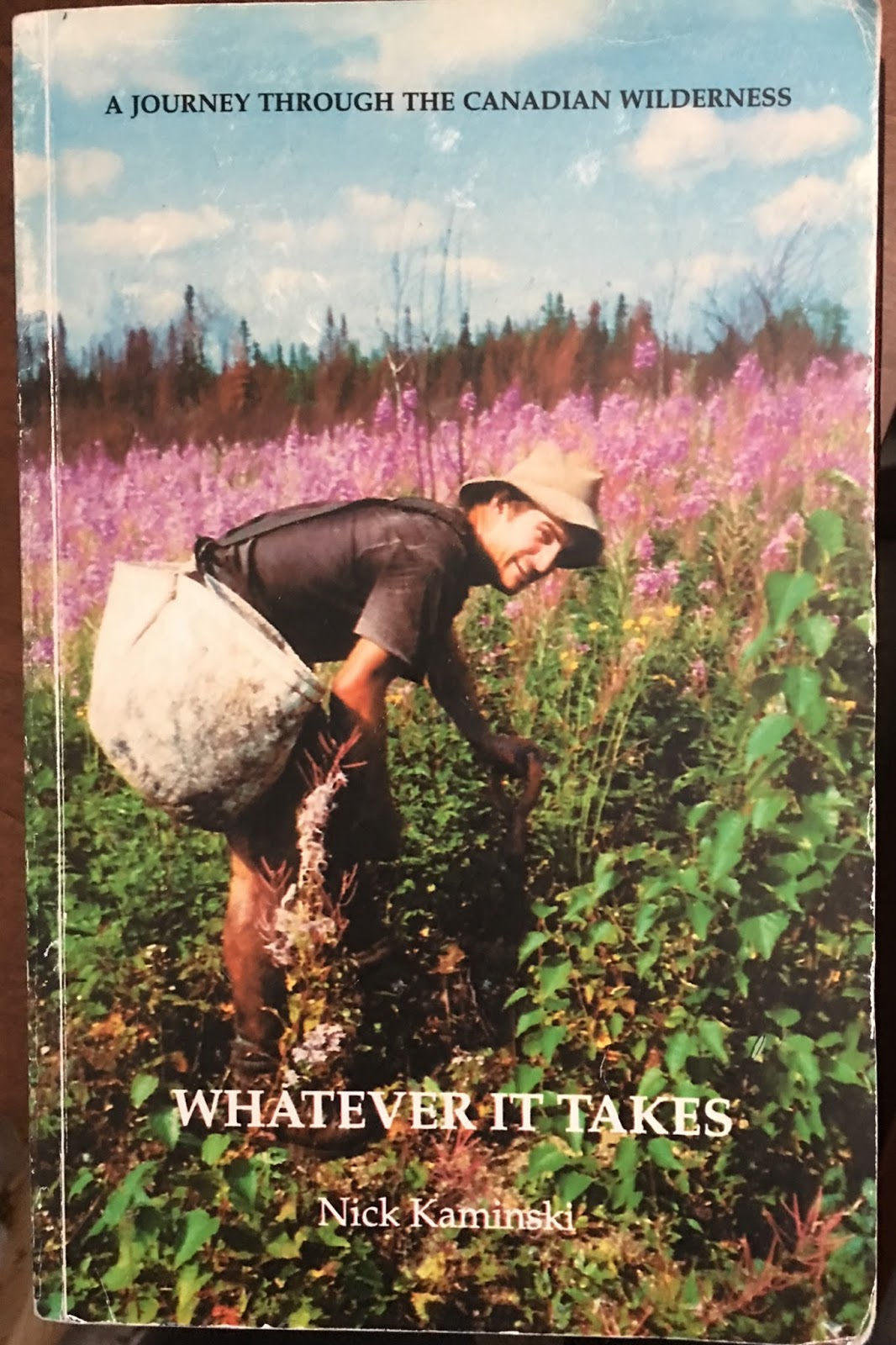
Title:  Whatever It Takes
Author:  Nick Kaminski
Published:  2006
Link:  www.amazon.com/Whatever-Journey-Through-Canadian-Wilderness/dp/097805010X
(Quite hard to find, not currently available online).


Title:  Pounders
Author:  Josh Barkey
Published:  2016
Link:  www.goodreads.com/book/show/32507730-pounders


Title:  To Plant Or Not To Plant (That Is The Question)
Author:  Byron Goerz
Published:  1996
Link:  www.goodreads.com/book/show/21566671-to-plant-or-not-to-plant


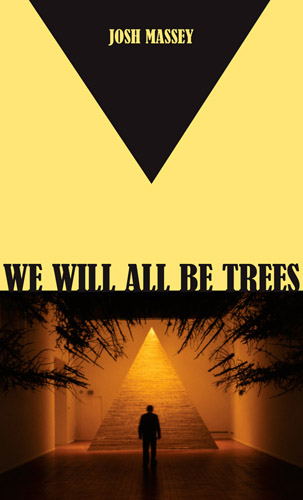
Title:  We Will All Be Trees
Author:  Josh Massey
Published:  2010
Link:  www.goodreads.com/book/show/7264802-we-will-all-be-trees#bookDetails
(The only science fiction book here about tree planting).


Title:  The Book Of Tree Planter Suicides
Author:  Toby Pikelin
Published:  2013
Link:  issuu.com/efterblivet/docs/btps_online_book_pdf
(This is a free one, just check out the link).


Title:  The Overstory
Author:  Richard Powers
Published:  2019
Link:  www.goodreads.com/book/show/40180098-the-overstory
(Not about planting, but great fictional story with lots of factual info about trees).


Title:  Big Lonely Doug
Author:  Harley Rustad
Published:  2018
Link:  www.goodreads.com/book/show/38903644-big-lonely-doug
(Not about planting, but a great non-fiction book that reminds us of the importance of old growth stands).


Title:  Empire Of The Beetle
Author:  Andrew Nikiforuk
Published:  2011
Link:  www.goodreads.com/book/show/11066432-empire-of-the-beetle
(Not about planting, but close enough, and a fascinating read).


Title:  The Golden Spruce
Author:  John Vaillant
Published:  2006
Link:  www.goodreads.com/book/show/88335.The_Golden_Spruce
(Not about planting, but a lot of planters have really enjoyed this one).


For more information about tree planting in Canada, visit:

www.Replant.ca


For more books by Jonathan "Scooter" Clark, visit:

www.JonathanClark.ca


Monday, January 09, 2017

Potential Bumper Sticker Designs

I'm considering printing some bumper stickers.  I did this once in the past, almost ten years ago, but at the time, bumper sticker technology was a lot more primitive.  The original ones were pretty boring, just green letters on a white background.

I was playing around with some potential designs this afternoon, and came up with three so far.  Let me know which one you think is best?

Edit:  I eventually decided to print some of each.


CHOICE 1:  TREE IN LAKE


CHOICE 2:  YELLOW FIELD BLUE SKY


CHOICE 3:  DECIDUOUS SEEDLING IN HAND


Sunday, January 08, 2017

Sharon Moalem's "Survival Of The Sickest"

I read a lot of books, but I'm not frequently motivated to write a review of these books.  However, I just finished a book that one of my tree planters recommended to me, and I found it to be a great choice.

The book was written by Sharon Moalem, a Canadian doctor with a Ph.D. in human physiology, specializing in neurogenetics and evolutionary medicine.  The book is non-fiction, and is best suited for readers who have at least completed high school biology, or who have a basic understanding of genetics and/or medicine.  But this is far from a textbook.

Rather than going into a traditional style of review, I'm instead going to just list a handful of subjects that the book talks about, in point form.  This alone should be enough to let you know whether or not you might find it to be interesting:

- Many people are familiar with the practice of "bleeding" a patient, which is a practice that happened with the earliest recorded history, and which for some time in the modern era "made no sense."  Well, consider the fact that iron is a critical mineral for human life (I didn't realize how critical until I read this book).  What if there was a disease (there is, called hemochromatosis) in which a person was unable to "use up" the iron in their body, and the amount stored kept growing?  Too much of a good thing is sometimes bad, and this oversupply of iron can happen.  With a lack of other easy ways to remove iron from the blood, "bleeding" a patient sometimes IS a good practice.

- People with hemochromatosis have too much iron in their bodies, as noted above.  But even though their bodies are littered with iron, one important place where this iron doesn't collect is in the white blood cells.  The bubonic plague of the Middle Ages was a bacterial disease in which the infectious agent entered the white blood cells, and the iron in the white cells was an important part of the growth of the infection.  But people with hemochromatosis lucked out.  In many cases, the lack of iron in their microphages protected the human from the disease.

- There's a great section talking about Diabetes and sugar intake (I'll have a lot less sugar in my coffee from now on).  The number of obese children in north America today is staggering, and getting worse.  Many of these children are getting diabetes, as a tie-in to their obesity.  I won't get into the diabetes section in depth, but it taught me a lot about how to should think about certain lifestyle changes.

- The pituitary gland is indirectly responsible for the production of melatonin, which helps prevent skin cancer.  But the pituitary gland gets its information from the optic nerve.  Wearing sunglasses will trick the optic nerve, and affect your melatonin production, which can put you at much higher risk for skin cancer!

- There is a theory that the reason people often sneeze upon exposure to bright sunlight is because when we still lived in caves, if a person sneezed upon coming out of the cave into bright sunlight, the sneeze might dislodge microbes and molds from the nose or upper respiratory tract.  I hadn't heard this theory before.  I actually disagree with it, but it's interesting (my theory is much more basic, namely that a sneeze is intended to possibly help divert your stare when you look at the sun, to avoid damage to your retinas).

- The last ice age ended not over a slow change of a few thousand years, but rather, over an unbelievably rapid global adjustment of just three years!  This has staggering implications upon climate change theory today.  We could mess up our planet far, far more quickly than we currently believe.

- Human females tend to be more likely to conceive males during "good times" and more likely to conceive females during "tough times" (this refers to a very macro scale, as in global conflicts and disasters, not a temporary challenge such as "I broke a coffee mug half an hour before we had sex).

The book also goes into discussions such as:

- Why Asians often have such an intolerance to alcohol.

- Theories on better ways to prevent cholera outbreaks.

- How sunspot activity (and solar radiation) may relate to some past global influenza epidemics and pandemics.

- The relationship of telomerase to the Hayflick Limit to cancer to longevity.

- Why some diseases are passed down directly from woman to granddaughter, rather than woman to daughter (because when a female is conceived, her lifetime supply of eggs is already in her body when she's still a fetus - thus the eggs that produce the next generation were actually carried inside the grandmother's body when the mom was not yet born).


Phew, this post has covered a lot of ground.  Well, if all of the above is of interest to you, then you're going to learn a lot from this book.

Happy reading ...


Follow Jonathan Clark on other sites:
        Twitter: twitter.com/djbolivia
        SoundCloud: soundcloud.com/djbolivia
        YouTube: youtube.com/djbolivia
        Facebook: facebook.com/djbolivia
        Main Site: www.djbolivia.ca
        About.Me: about.me/djbolivia
        Music Blog: djbolivia.blogspot.ca
        MixCloud: mixcloud.com/djbolivia
        DropBox: djbolivia.ca/dropbox


Sunday, April 10, 2016

Hi & Ho, We Plant Trees

Several years ago, Peter Krahn (of Peppermill Records) released a compilation of tree planting songs, written and performed by tree planters, about planting.  He made this available as a free release from Peppermill.  The compilation was titled, "Hi and Ho, We Plant Trees."

I've always been impressed that I've gotten into planting trucks at several different companies and heard songs playing that were on this compilation.  It's been shared widely over the past several years, and I'd like to continue to share it.

Here's the cover art for this album:


Many thanks are due to the individual artists, for making these songs available, and also to Krahn, for putting this project together!


Free Downloads

To download these songs, there are three choices:  Dropbox, RAR Archive, or SoundCloud.

To download from Dropbox:
1.  Go to my public Dropbox folder:  www.replant.ca/dropbox
2.  Go into the "Canadian Reforestation" folder.
3.  Go into the "Planting Music" sub-folder.
4.  Go into the sub-folder called "The Flagging Tapes, vol 1".
5.  You can either pick MP3's to download (good quality 320 kbps, smaller file size) or WAV files (uncompressed audio, slightly higher quality, larger files).

If you're able to uncompress RAR archives, this download would be a slightly faster way to download the entire compilation:

Finally, to download individual songs from SoundCloud, click on the download arrows on any of the SoundCloud widgets throughout the rest of this page.


Wednesday, April 06, 2016

Andrew Nikiforuk's "Empire Of The Beetle"

“Empire Of The Beetle,” by Andrew Nikiforuk, is a pretty interesting book for anyone who is interested in forestry. The subtitle of the book is, “How Human Folly and a Tiny Bug Are Killing North America’s Great Forests.” But the book is about more than just beetles; a few other pests are also discussed.  I read this book several years ago, and wrote a short review at the time.  Since the spruce beetle is now becoming more of an issue in British Columbia, I thought it would be good to re-visit "Empire Of The Beetle," so here is my initial review.  I'll be talking more about the spruce beetle in future posts.

Many people have probably heard about the Mountain Pine Beetle (MPB) epidemic in western Canada. But the pine beetle is just the most visible face of a larger issue. In the past few decades, several species of beetles have girdled and killed more than thirty billion lodgepole, pinyon, ponderosa, and whitebark pines, as well as white spruce and Engelmann spruce. This sort of devastation is actually quite normal for forests, when Nature is left alone to do its work, but the economic consequences of this destruction have caused the current epidemics to be labelled as a “problem.”

Beetles are probably one of the most successful examples of life on our planet. Beetles (Coleoptera) make up a third of all life on Earth, and a quarter of all animals. Estimates for the number of different species of beetles are in the vicinity of ten million. If you took just one part of the beetle family, the bark beetles, there are more than a thousand more species than there are types of mammals on Earth. Beetle fossils exist that are a third of a billion years old (significantly older than dinosaurs), and various species can live in almost every environment: in rivers, lakes, jungles, caves, forests, deserts, and mountaintops. Bark beetles cooperate on a social level, and bury their dead. If you look globally at species of animals that are smart enough to hunt in packs, there is only a very short list: humans, wolves, hyenas, lions, killer whales, piranhas, ants, and bark beetles.

One interesting thing is that bark beetles themselves do not kill the trees they inhabit. Beetles, like some other insects, act as a sort of mobile zoo, carrying all kinds of other life forms with them. The spruce bark beetle, for example, can carry up to ten different species of fungi, six different kinds of mites, and nine different types of bacteria. All of these organisms work together as a complex mini ecosystem, as the life cycle of the beetle continues. It is the effects of these various organisms, in concert, that lead to eventual conifer mortality.

The interesting thing is that beetles are not necessarily bad for the forests. Some people would disagree, particularly those who focus on an immediate snapshot of the forests, and who worry about the current economic potential. But in the long term, over decades and centuries, beetles are unquestionably an important part of forest maintenance. You see, beetles basically act to keep a forest healthy overall, in the longer term. There is no need to protect the trees from the beetles; the beetles and the trees have been living in a symbiotic relationship for millions of years.

Starting about a century ago, North Americans began to focus some efforts on fire suppression within the forests. The obvious rationale was that if forest fires were suppressed, there would be more wood. But nature relies on regular fires (every few decades) to keep a forest “tidy” and healthy. By putting out the small fires, what happened was that fuel loads began to increase. When a fire eventually came along that couldn’t be put out right away, it could grow to enormous size.

Many people have mistakenly assumed that beetle-killed trees would lead to increased forest fire risks. I actually believed that myself, several years ago. That seems logical, because when you look at a dead tree that has been killed by a beetle, it's dry and reminds you of firewood. But when you start to get experience with forest fires, you quickly realize that the majority of major forest fires are “crown” fires. Rather than the coarse wood (the thicker primary branches and trunks of the trees) burning, it is the “fines,” the needles and leaves, that provide the quick fuel that burns fast and hot. Although you would think that living green trees would be moist and less prone to fire than dry and dead stems, the exact opposite is true. Fire likes smaller pieces of fuel with more relative surface area that is exposed to oxygen, and fire also likes density, so flames can jump from fuel source to fuel source. You get this with living trees, but not dead ones. When a tree has first been killed by beetles, yes, it's a high fire risk for the first year or so. But once the needles drop off, it is not a high fire risk. The lesson here is that determined fire suppression eventually guarantees either a catastrophic fire or a bark beetle epidemic.

Any competent forester or woodsman will tell you that a diverse forest is the best kind. But logging companies like to work with monocultures, large tree stands where all the trees are the same species and the same relative age. When forests are harvested and replanted, they are usually planned as a plantation of just one or two dominant species (spruce, pine, fir, or cedar) and all the trees end up having the same approximate age. But it is this kind of forest that is most susceptible to damage from beetles. Basically, the beetles see these forests as a massive free lunch, and in attacking the trees, they are really just protecting the trees from themselves (from overcrowding). When forests are left to themselves, beetles attack a very small number of trees each year, in a system which promotes diversity and balance. It is only when “unnatural” large concentrations of a single species are allowed to grow together that true epidemics become possible. As foresters said in East Texas in the 1980’s, when southern pine beetle growth exploded, “What we have here is not an epidemic of southern pine beetles, but rather, an epidemic of southern pine.”

At this point, the decision about what to do with beetle-killed forests is what concerns me. Many foresters prefer the “mow it down and salvage the wood” approach, resulting in more clear-cutting than would have otherwise been the case. As a tree planter, I initially wished that the BC government would take more of the beetle-killed areas that they couldn’t salvage log and just bull-doze the standing dead wood, and then let our industry replant new forests (preferably multi-species). But since then, I’ve learned a lot more about the interplay between various parts of the forest ecosystem. The northern boreal forests are very efficient carbon sinks, perhaps more so than tropical rainforests. A beetle-killed forest left standing to rot slowly will also release carbon slowly, over a period of many years. As that gradual release takes place, the carbon loss is offset by new undergrowth, which happens very quickly as the sunlight can easily penetrate through to the forest floor. So effectively, leaving dead trees standing is an effective carbon sequestering strategy, probably much more wise in the long run than cutting the dead wood for use by wood pellet factories, where the product gets shipped halfway around the world. Of course, we tree planters could probably still speed up that renewal process by planting a mix of several species in these understory plants.

I won’t go any further into the ground that the book covers, because that would spoil things for people who are planning to read the book. But I should note that a 2001 provincial review in British Columbia suggested that in terms of the “costs and benefits of clear-cutting beetle-kill ... a forest renewed by bark beetles was a much smarter economic proposition than a monster clear-cut designed by humans with forestry degrees.” I personally don’t want to suggest that the pine beetle epidemics are a good thing in an absolute sense. But I do think that a moderate level of pine beetles is an important part of natural renewal, and beetle renewal does have positive aspects that politicians and logging companies sometimes seem to ignore in favour of short-term economics. I guess the best thing though, would be for you to read the book and form your own opinions. Here's a link to buy the book:


Empire Of The Beetle on Amazon.ca


Friday, February 26, 2016

Tree Planting Books: Eating Dirt

About five years ago, a book came out that focused on life in the coastal tree-planting community.  The book was called "Eating Dirt," and was written by Charlotte Gill.  I eagerly read it as soon as I got my hands on it, and wasn't disappointed.  Charlotte was a tree planter, but the book didn't focus entirely on planting. There was also a lot of background about the logging industry in general, and some background on tree physiology and historical biology, with both local and global perspectives.

At the time, I wrote a very short review and made some notes.  I've been tempted to read the book a second time since then, but I'm also working on writing a couple books of my own.  I really don't want anything in her book to influence what I'm writing, which is why I've reluctantly refrained from a second reading.  However, I took my original notes and I'm posting them here today because I want to remind planters about this book.  At some point over the next several weeks, I'll share some notes about three or four other books that should also be of interest to planters.

Charlotte Gill, the author, was a planter for over twenty years.   She started in Ontario, but moved out west.  When she was still working in western Canada (up until just a few years ago), she worked eight or nine months each year, predominantly planting coastal projects (the professional part of the industry), plus a bit of southern Interior work in the early summer months.  Many of the people that she mentioned in the book are people I know.  When I'm planting on the coast, I usually work in the same area where she did a lot of her work (the north Island), and I've worked for the same company that she often worked for.


Here's an excerpt from a review by Quill & Quire:

"A thoroughly Canadian story, Eating Dirt is not out of place alongside other classic memoirs of the bush by Susanna Moodie or Farley Mowat."

Eating Dirt was the winner of the BC National Award for Non-Fiction, and was also short-listed for both the Charles Taylor Prize for Literary Non-Fiction and the Hilary Weston Writers' Trust

There were a few things in the book that really caught my attention. For instance, she was talking about the amount of ground that a million trees covers. When this is quantified in acres or hectares, it somehow seems less impressive than her way of illustrating: one million trees covers five hundred city blocks in Manhattan. My own camp usually plants close to six million trees a year. I didn't really think about how much ground we cover until I thought of it as almost three thousand city blocks.

Another interesting fact is that when you're in a full forest canopy and you look up, it probably looks like the branches of adjoining trees are all intertwined above you. But they aren't. The trees are able to somehow sense their neighbours and the branch tips almost always stays a few centimetres away from each other. Of course there are occasional exceptions, but natural avoidance is generally the case. Charlotte mentions a lot of facts about trees and nature that seasoned planters take for granted, but which would probably surprise readers who aren't planters.

Charlotte also talks about the number of calories a planter consumes in a day: around five thousand. If anything, I think this is an under-estimate. It's hard to count calories accurately in a bush camp, because most planters just load up without measuring portions, and shovel the food in as quickly as possible. But I've always been curious about caloric intake, I've always tracked my own personal food costs while planting on the coast, and I've sometimes made attempts to measure my calories. A normal person might be shocked. Here's a fairly normal example of what I might eat in a day on the coast:

Breakfast: 970 calories

3 yogurt cups = 240 calories
3 cinnamon buns with butter = estimated 375 calories
Bowl of strawberries = 45 calories
Four hard-boiled eggs = 310 calories

During Day, While Planting: 3,835 calories

4 pepperoni sticks = 320 calories
8 granola bars = 1280 calories
About 1/3rd block (150g) of marbled cheddar = 600 calories
A cup of chocolate chips = 805 calories
Anywhere from 8-12 bottles (500ml) of water = 0 calories
Three bottles of Gatorade (591ml) = 390 calories
One half of a large bottle of Clamato juice = 440 calories


Dinner: 3,415 calories (which I eat over a period of a couple hours)

Two cups of rice (bazmotti/risotto/brown/long grain) = 400 calories
1/2 bag of cheese perogies = 840 calories
A third of a bunch of asparagus = 30 calories
1 large chicken breast = 165 calories
Half of a bunch of broccoli = 105 calories
Half cup of butter (1/4 pound) on these previous items = 810 calories
Half cup of cheddar cheese on these previous items = 265 calories
1 litre of almond milk = 360 calories
Large bowl of ice cream = 440 calories
A couple gatorade containers of water that I take to bed = 0 calories

Total for the day: 8,220 calories
(and about a dozen litres of fluids)

A lot of planters who work hard for 8-10 hours per day can eat this much food, day after day, and still lose a significant amount of weight as the season progresses. Back when I planted full-time in the Interior, before I was a supervisor, I typically lost about 25 pounds in the first 6-7 weeks. By the way, I vary my diet a bit from day to day when I'm coastal planting - I really enjoy meat, so some days are a lot more protein heavy (fish, chicken, or red meat), and pastas or quinoa are often a staple on the coast too.  It all depends on my mood.  I've been having a lot more smoothies full of fruits and juicing greens lately too.

Tree planting is a job that most people would hate. For actual tree planters, it's more of a love/hate relationship. For people who've never done it, this book is a great insight into one of the strangest industries in Canada. Check it out if you can. Here's a link to order a copy from Amazon:
http://www.amazon.ca/Eating-Dirt-Charlotte-Gill/dp/1553659775


And while you're waiting for your copy of the book to arrive in the mail, here's a link to a lot of tree planting photo galleries that I've taken over the past ten years. Each of the photos on this page is actually a link: click on it, and you'll be taken to a page with dozens of other photos. In all, there are several thousand photos that I've put online:


 If you'd like to learn more about the Canadian Tree Planting industry, visit:

www.Replant.ca


Wednesday, February 24, 2016

Photos of a Moose Rescue in Northern Ontario

This happened a while ago (spring of 2012), but I was just looking at some photos and thought of this again and thought I'd post it to share it to a wider audience.  It's the story of a moose that got trapped in a fiber pond in Ontario.  The notes below are taken from the email that I received about it:


Sunday April 15, 2012 dawned cloudy and cool in the little community of Terrace Bay, located along the north shore of Lake Superior.  My friend and fellow Conservation Officer Jeff Anderson stopped by the house, my wife Eleanor made fresh coffee and we were enjoying a day off now that the fishing season for walleye had finally closed.
When the phone rang that morning, it was to alert us that a moose was helplessly mired in a spillway next to the towns pulp mill. Normally, the hustle and bustle of a busy factory would discourage wildlife from getting too close, but in this case, the mill had been idle for quite some time and the mill yard was quiet and tranquil. 
The large man-made ponds that surround the property are part of a system used to treat waste water. They are all fenced except for the one closest to the buildings. Its unclear as to how the young adult bull wandered into the first one, maybe he was fleeing a vehicle on the nearby road, or perhaps he just thought it was a marsh. Whatever the reason, he attempted to cross the football-field sized settling pond and began breaking through the deep layers of sodden wood fiber. 
We quickly hatched a plan and began gathering some rope, hip waders and snowshoes while Jeff grabbed a patrol truck, uniform and shotgun. It was important to be prepared for any eventuality! When we all rendezvoused at the site, we were faced with the saddest looking animal you could imagine. Utilizing the snowshoes to stay on top of the layers of fiber, we were able to approach the bull, fasten a chain knot around his neck and attempt to pull him free utilizing the winch on Jeff’s patrol truck. Unfortunately, we could not pull him horizontally with sufficient force to drag him out without the risk of injuring him, so we needed a new approach.
Mill staff came to the rescue and arrived on scene with a large, tracked loader equipped with a boom grapple. The rest of us shovelled a space around the moose’s chest around which we were able to secure a heavy line. With this new ability to lift and pull from around the animals girth, the big bull was slowly drawn out of the muck and onto the bank. 
It appeared as though he had been there overnight and he was near death from exhaustion and stress.  Remarkably, by supporting him in a prone position, giving him a couple bottles of water to drink and rubbing his legs to restore circulation, he began to perk up! After 20 minutes and several attempts, he stood up on wobbly legs for the first time in many hours. He tolerated us as we held him up and later, as he began walking with our assistance. It was a very strange experience to calmly accompany him for the long walk around the ponds perimeter, but we all felt the same heart-warming feeling when he quietly stepped into the bush under his own power, and disappeared from sight.


Terrace Bay is a town on the north shore of Lake Superior in Ontario, Canada about 150km East of Thunder Bay.

This was written by Paul Dennis, Conservation Officer, Ontario Ministry of Natural Resources.


Saturday, February 20, 2016

Starry, Starry Night

One of my checkers from last year (Mike Ross, known online as Lars Zergun), put together a YouTube video a few years ago which I really liked. I'm posting it here instead of on my music blog because I think the people here would enjoy it more (specifically the tree planters).


The video is a compilation of shots that Mike took, some of which are from planting, and some of which are not.

The background track that he set the clips to is called "Vincent" by Don MacLean of "American Pie" fame, which was actually on the American Pie album. It's a beautiful (and pretty famous) song which has been covered by dozens of other artists.

The song refers to Vincent Van Gogh, the famous post-impressionist painter who shot himself when he was 37 years old, long before his paintings became famous. Click here for a bit of background on the meaning of the song.